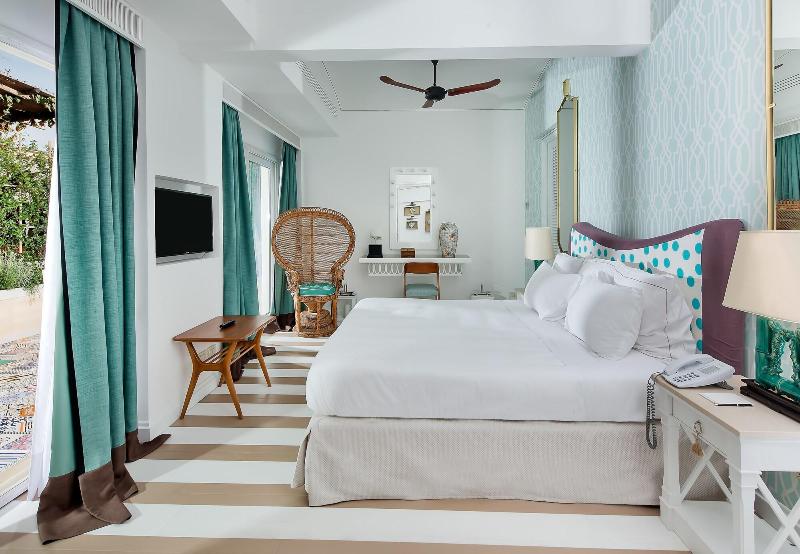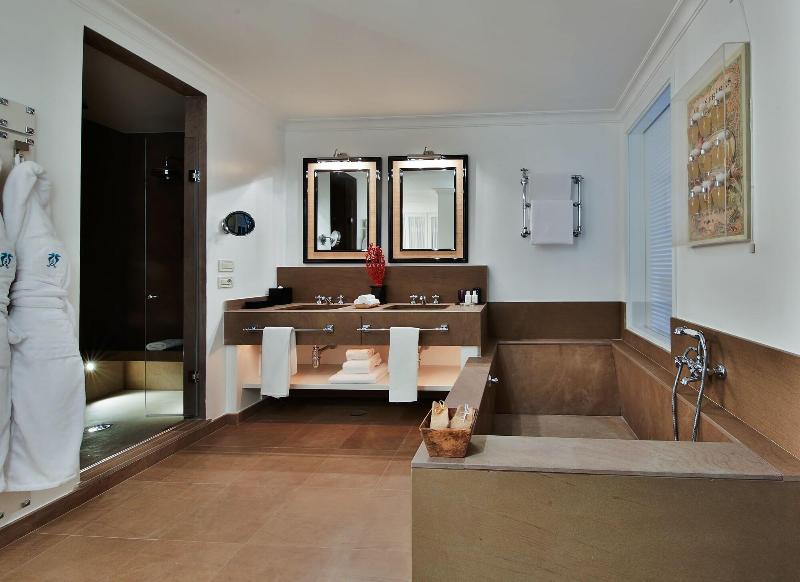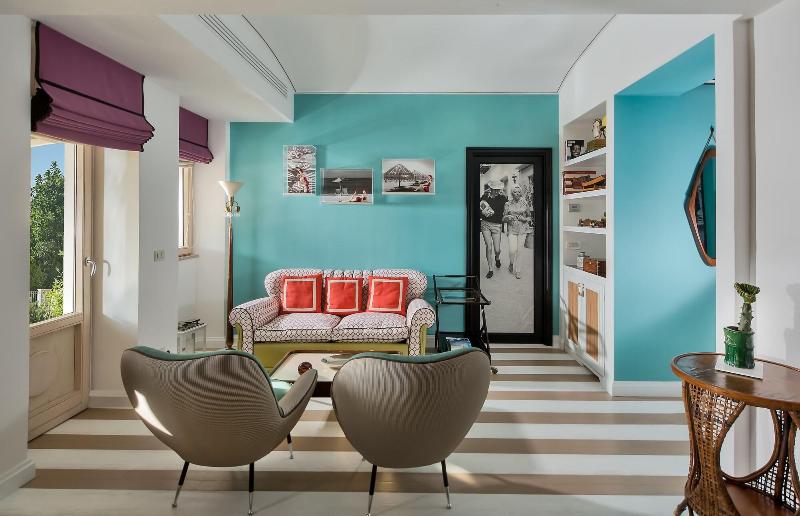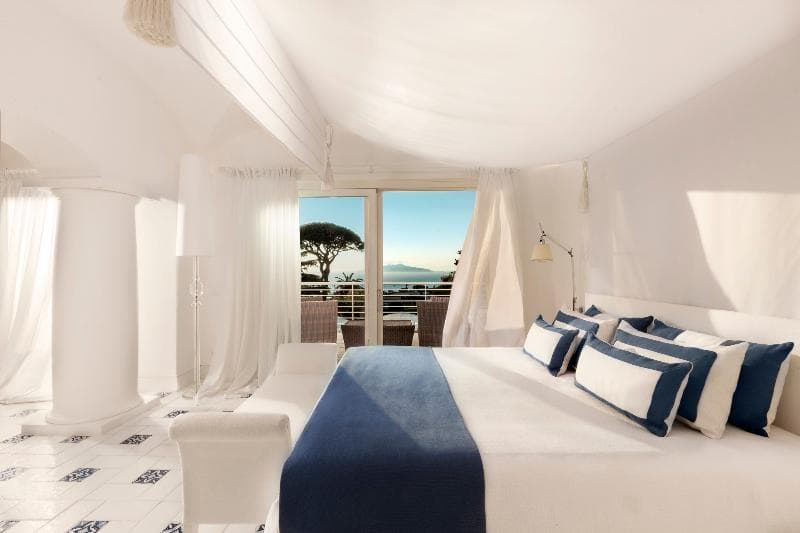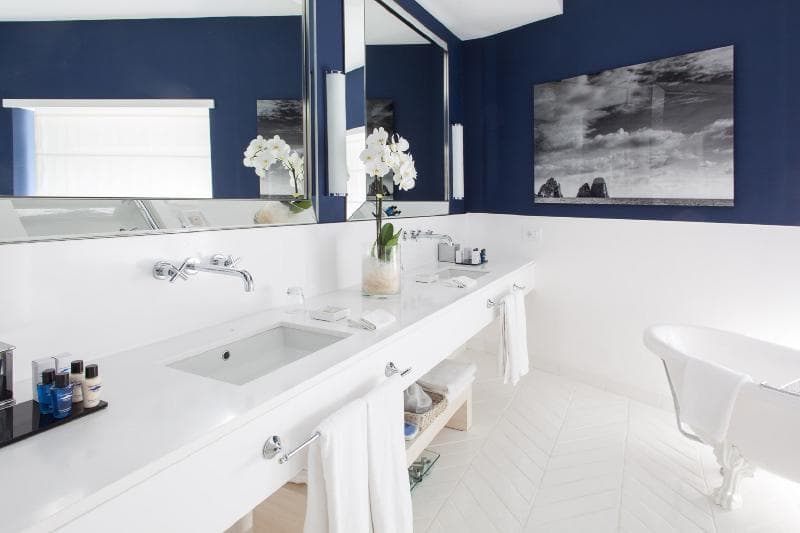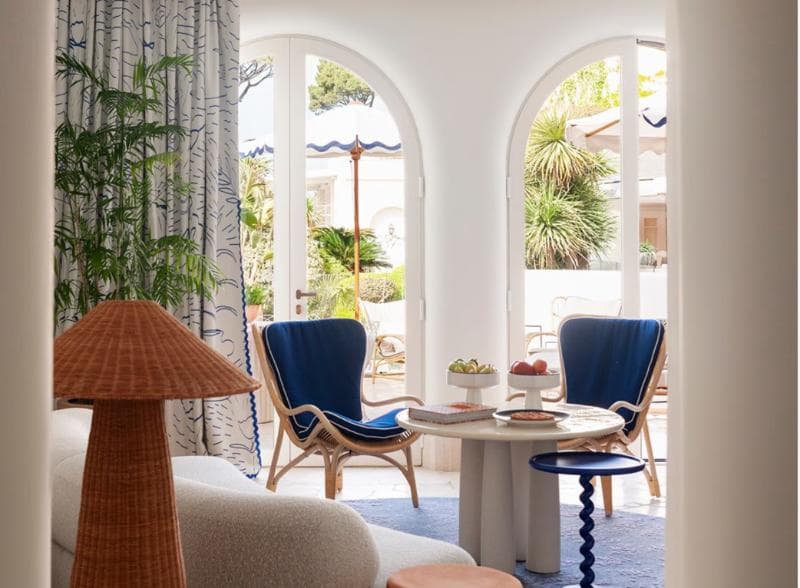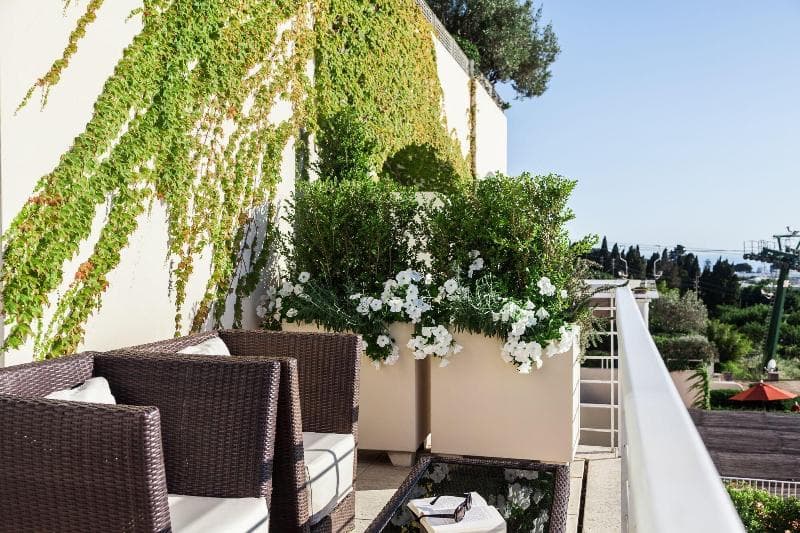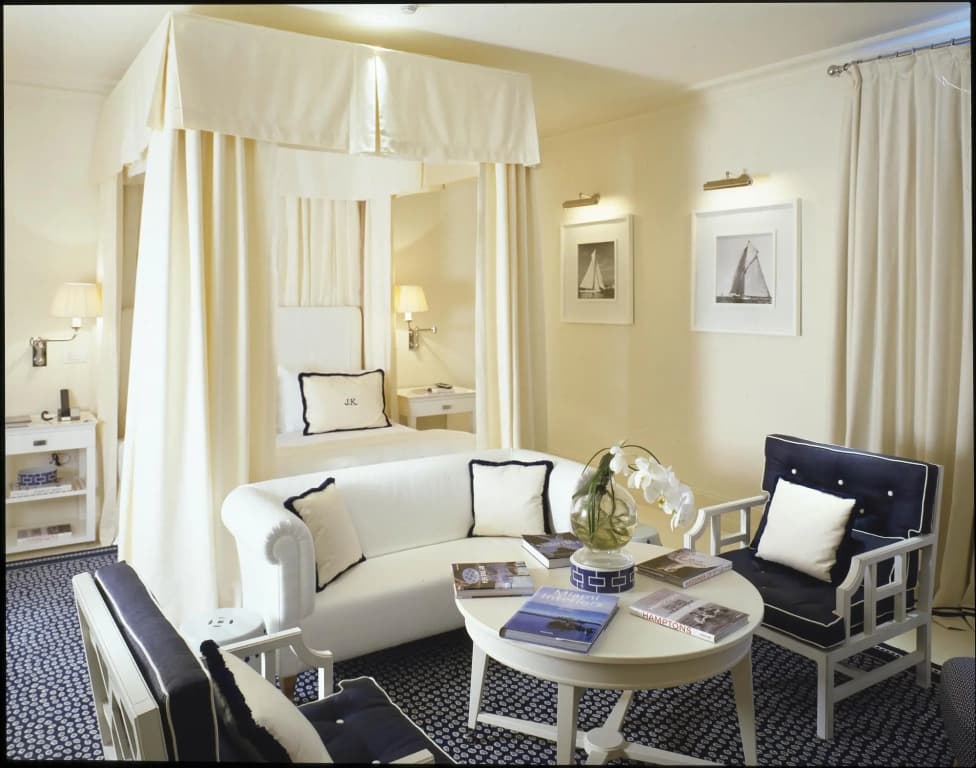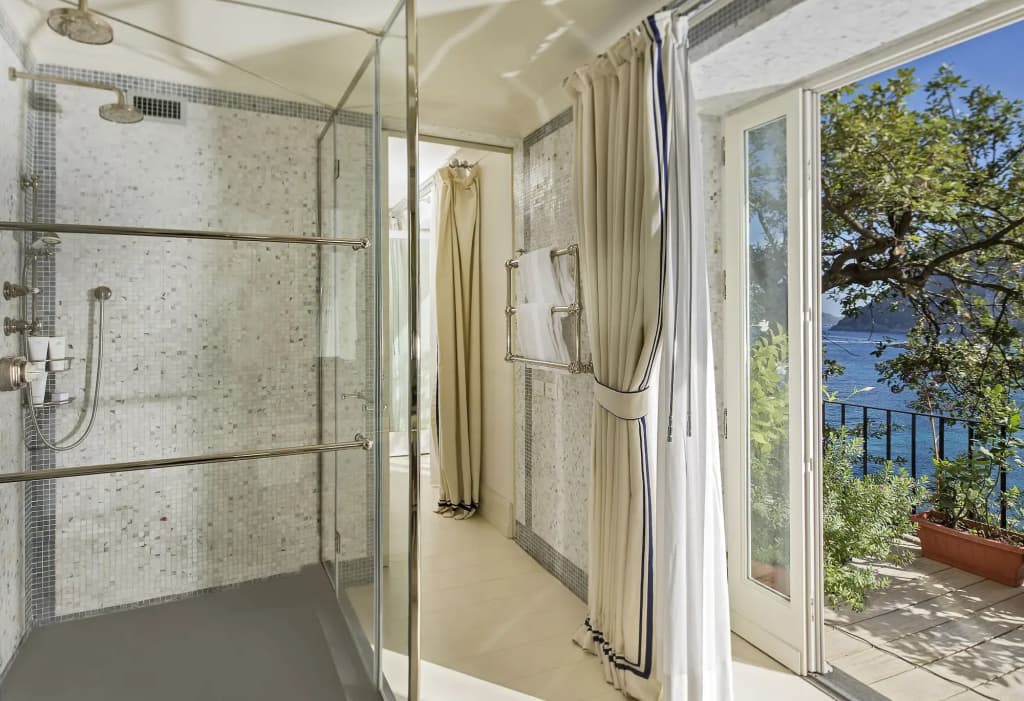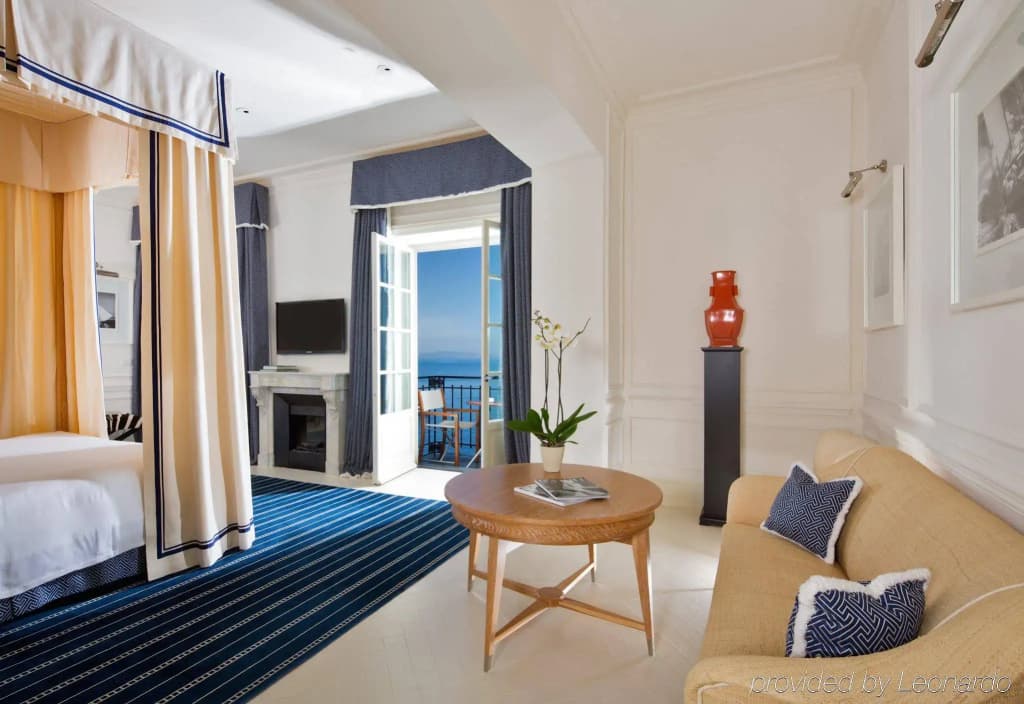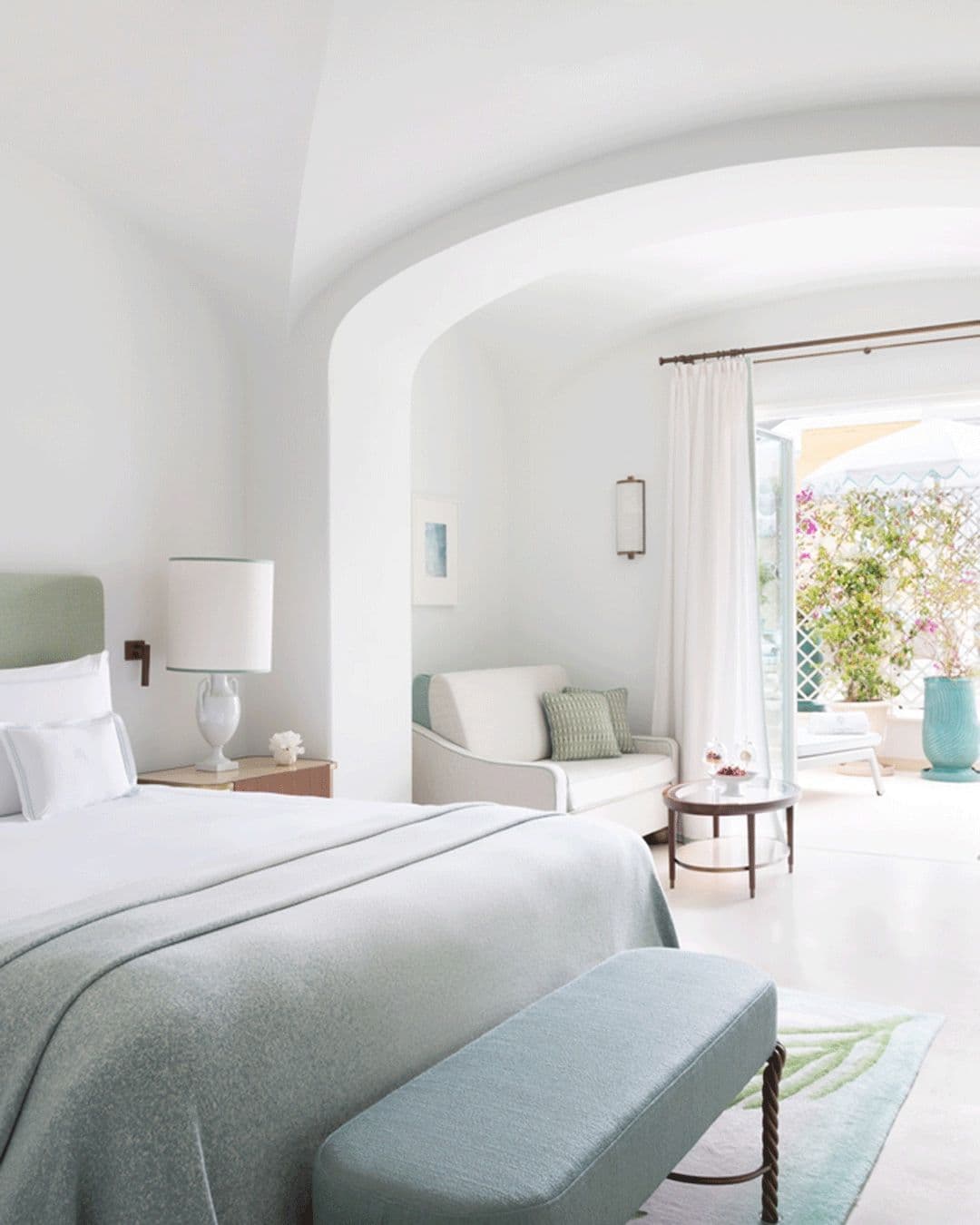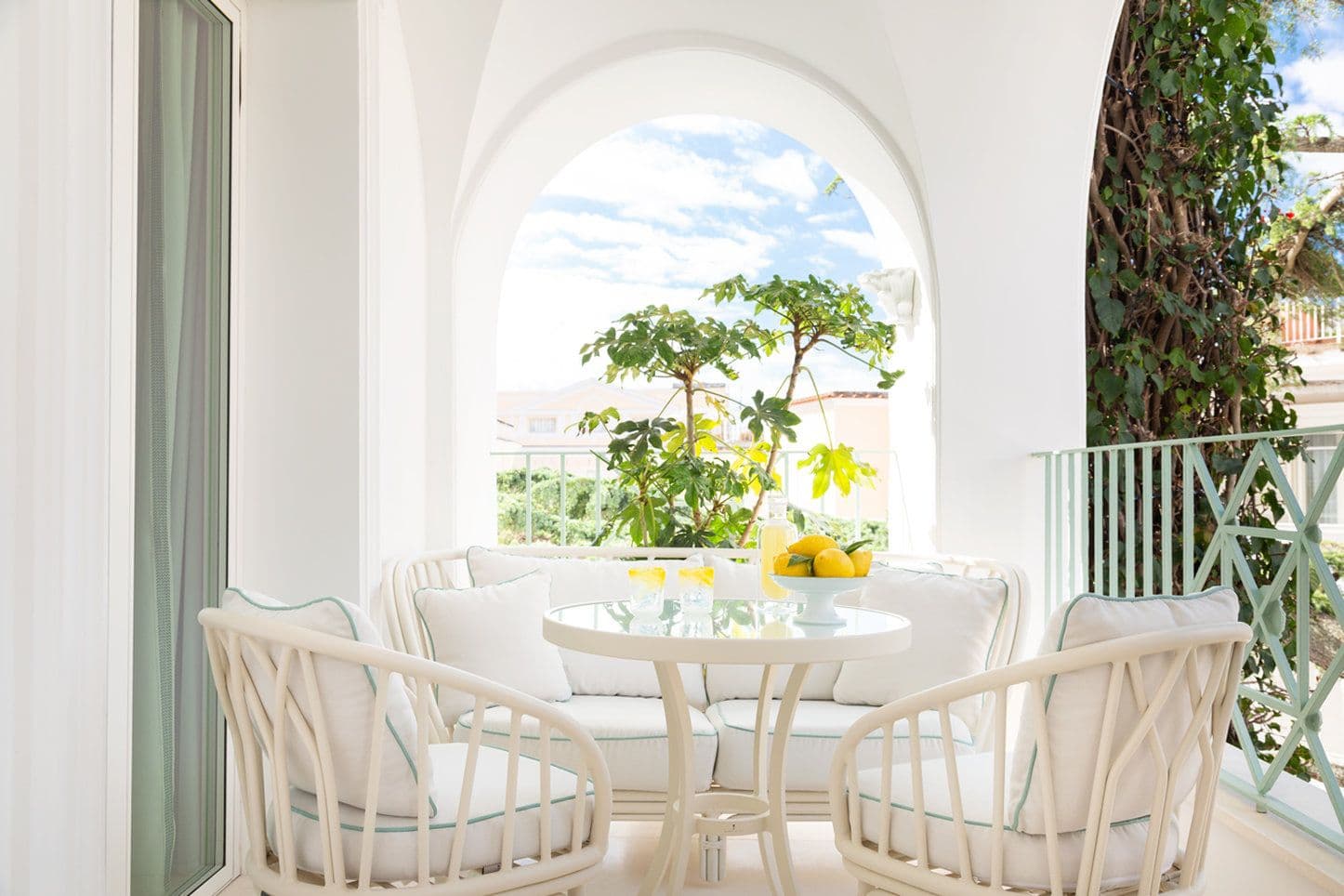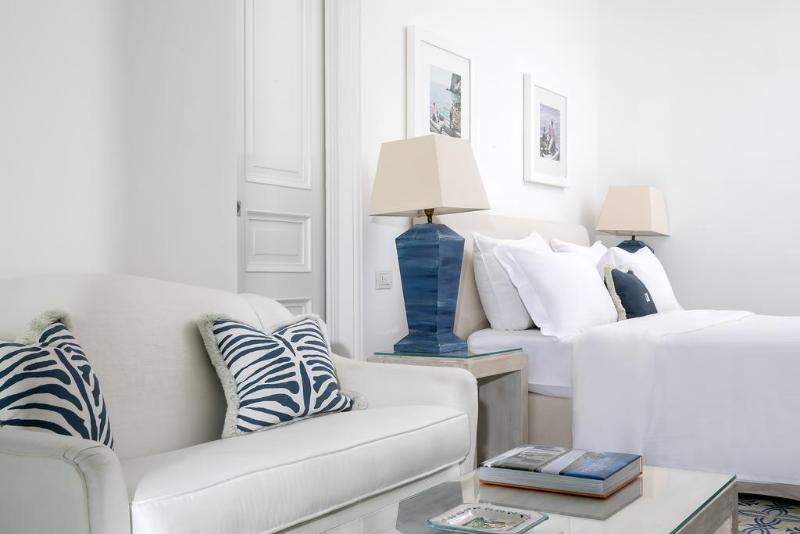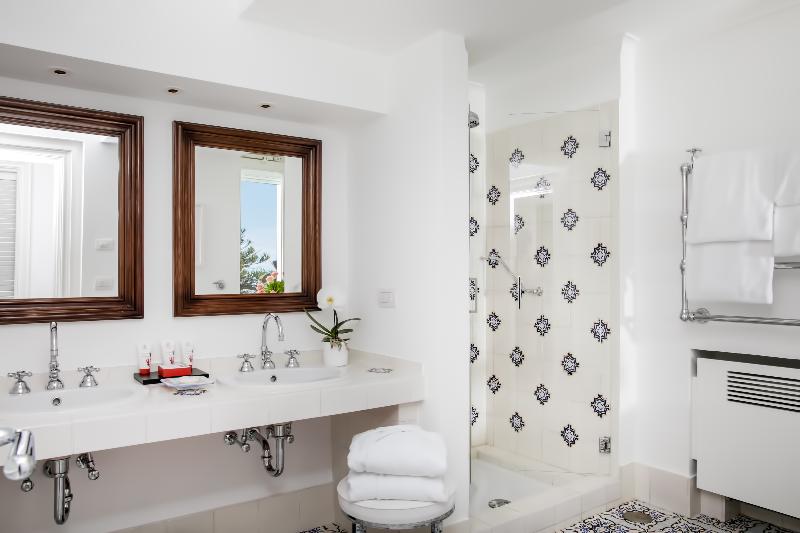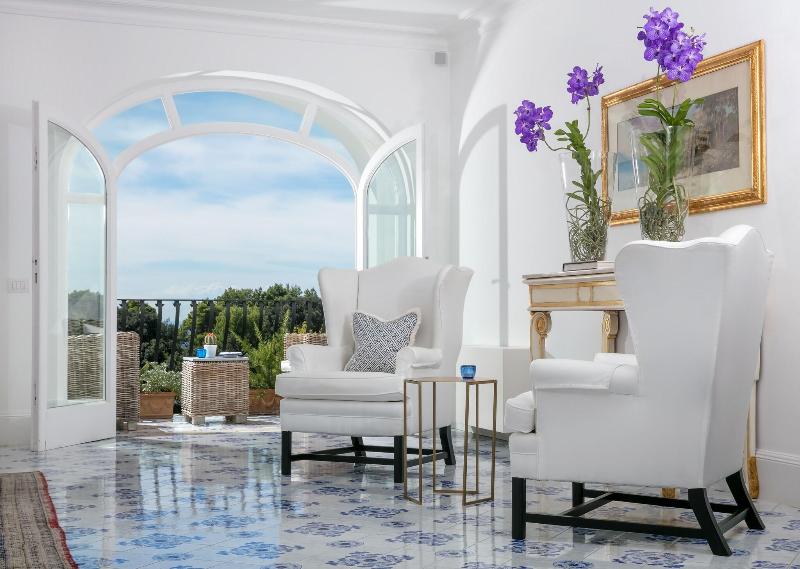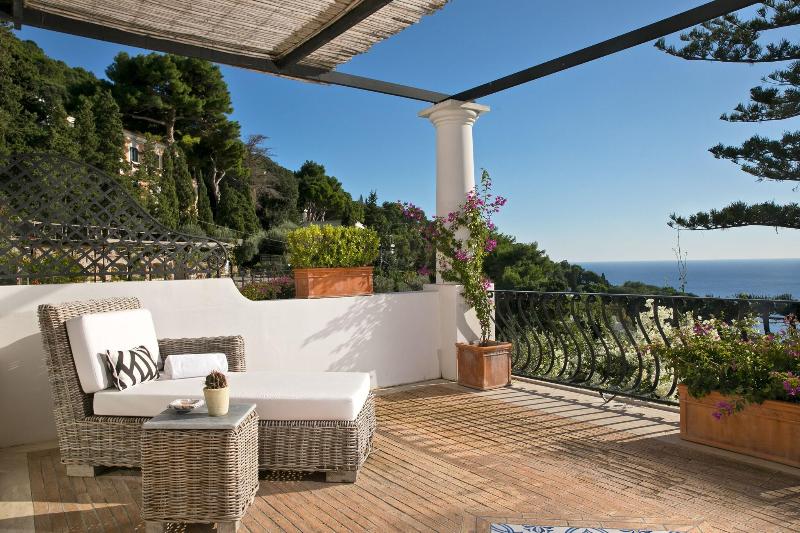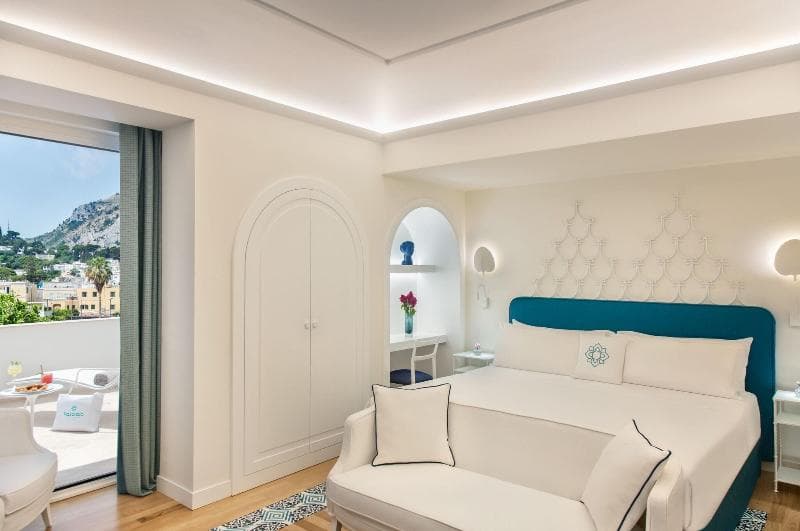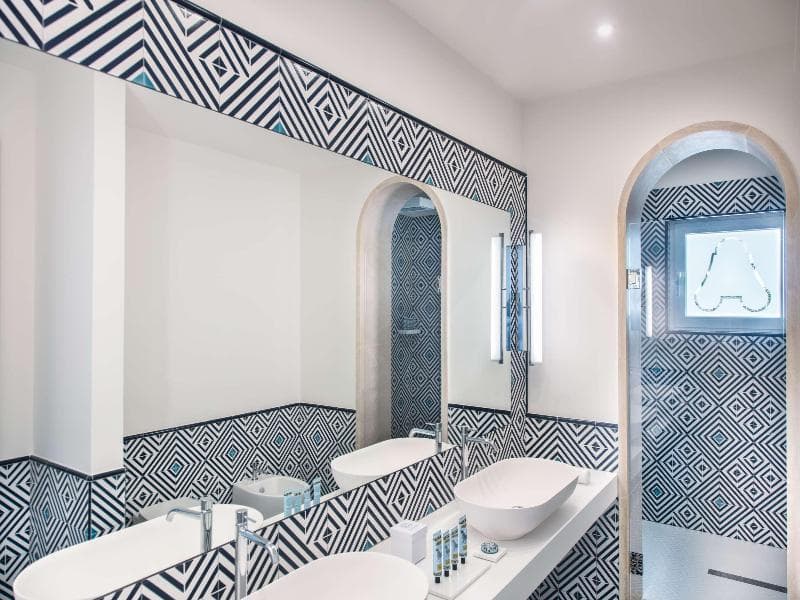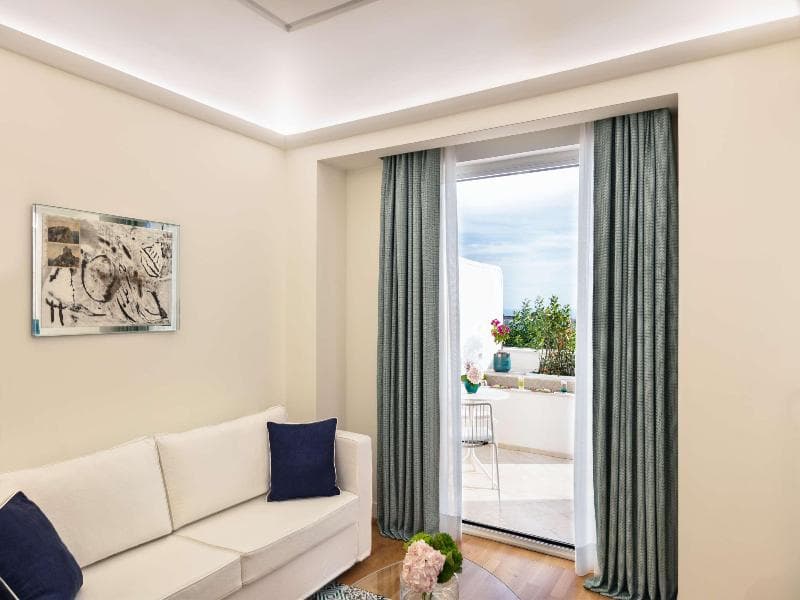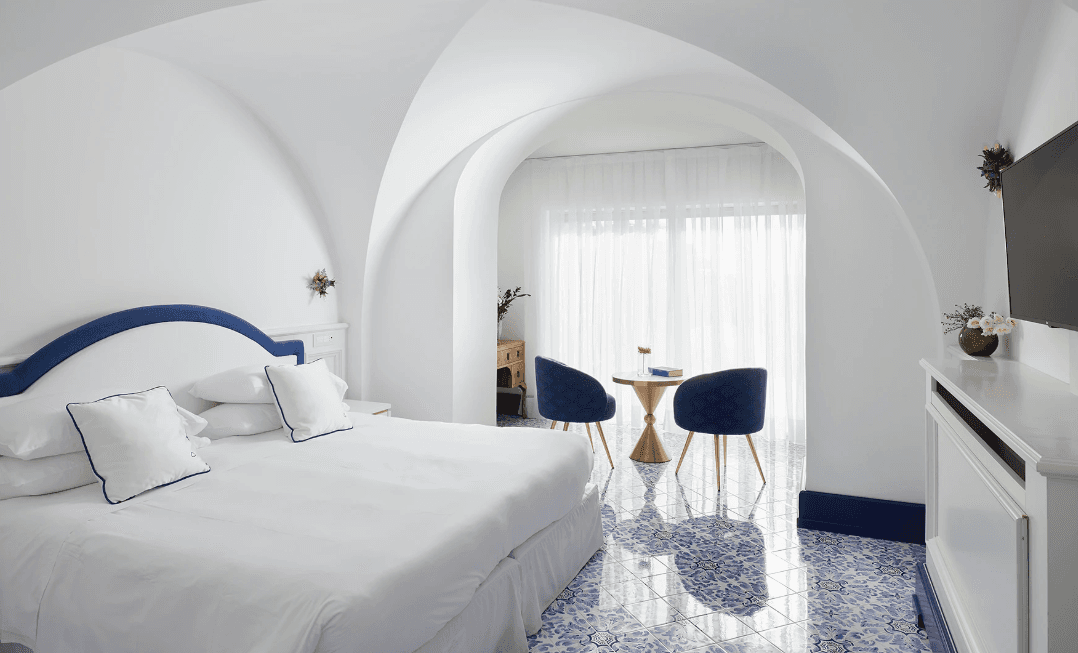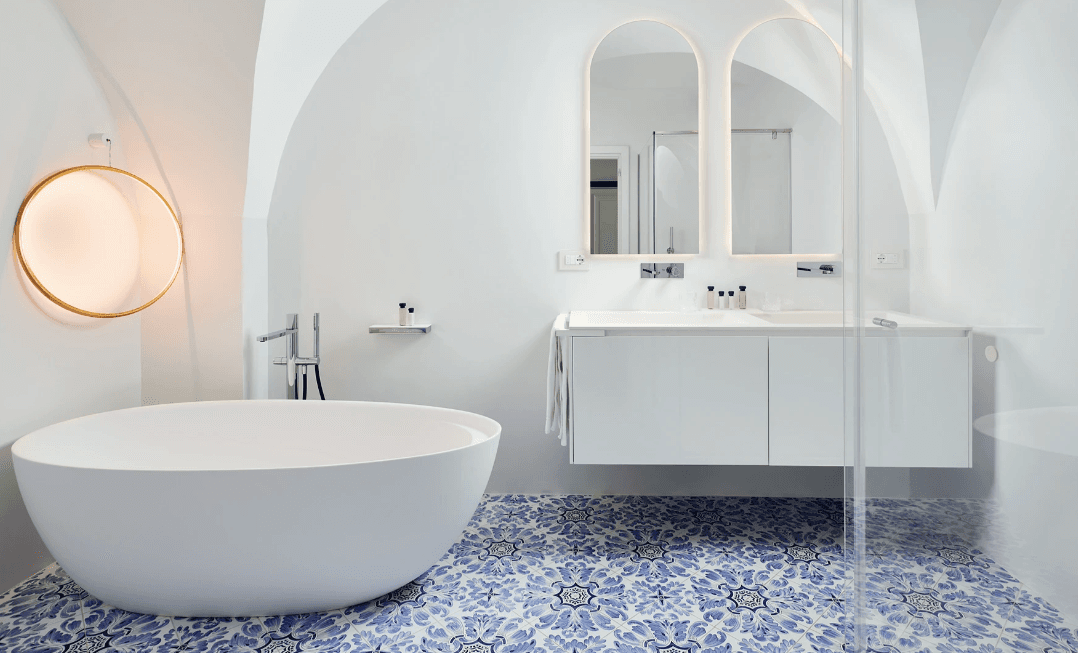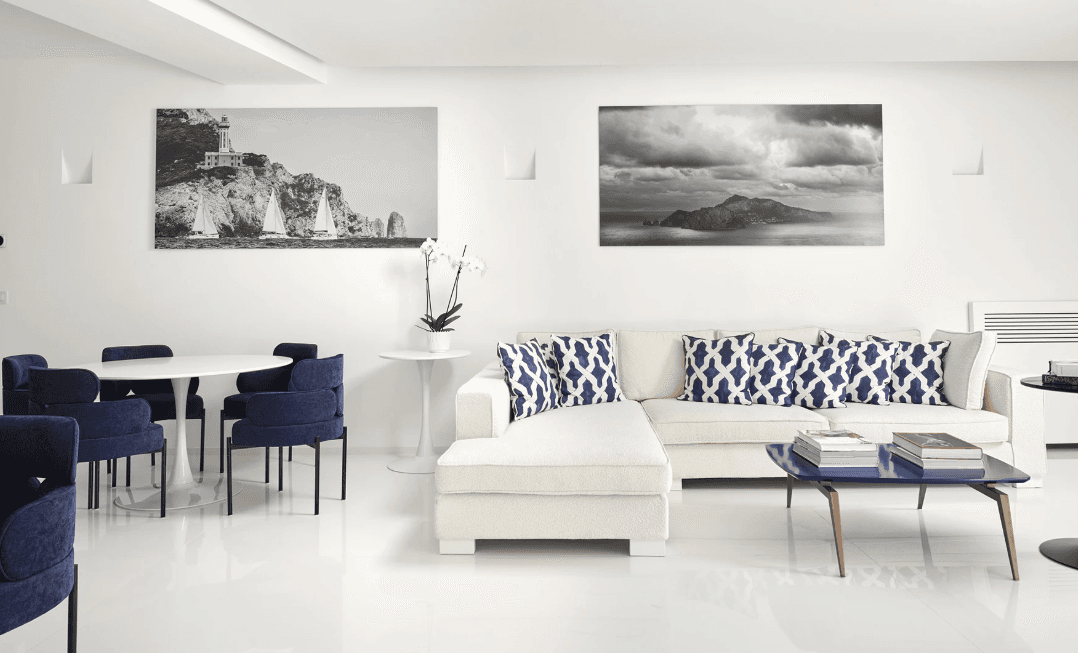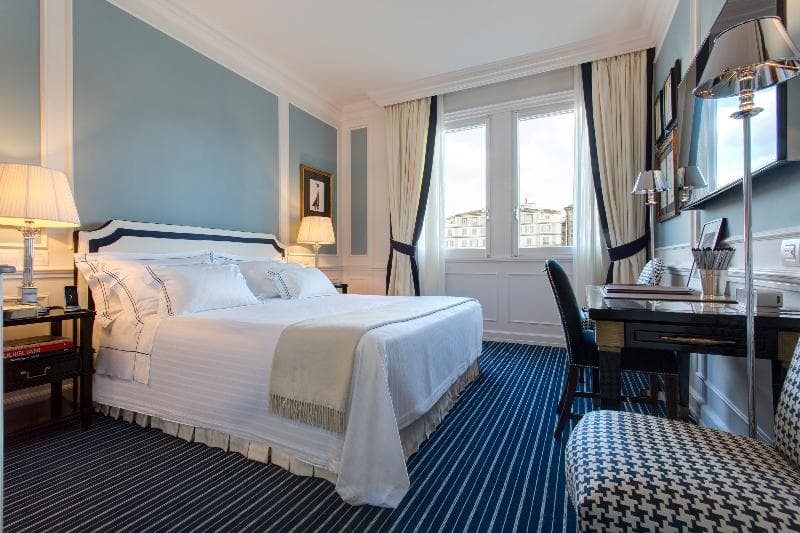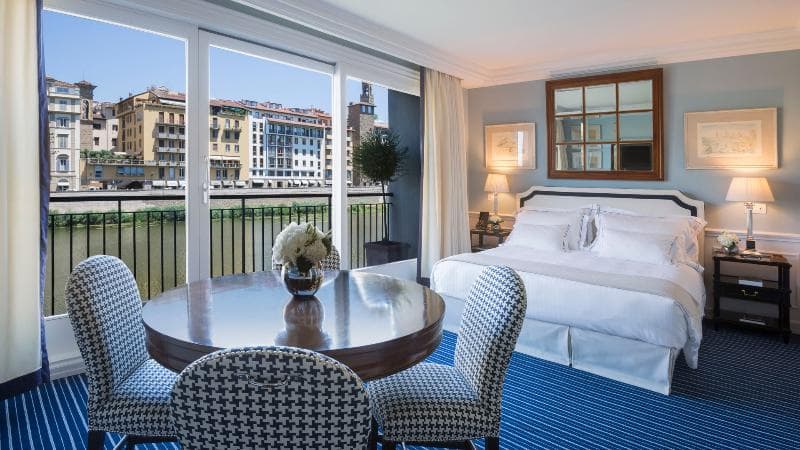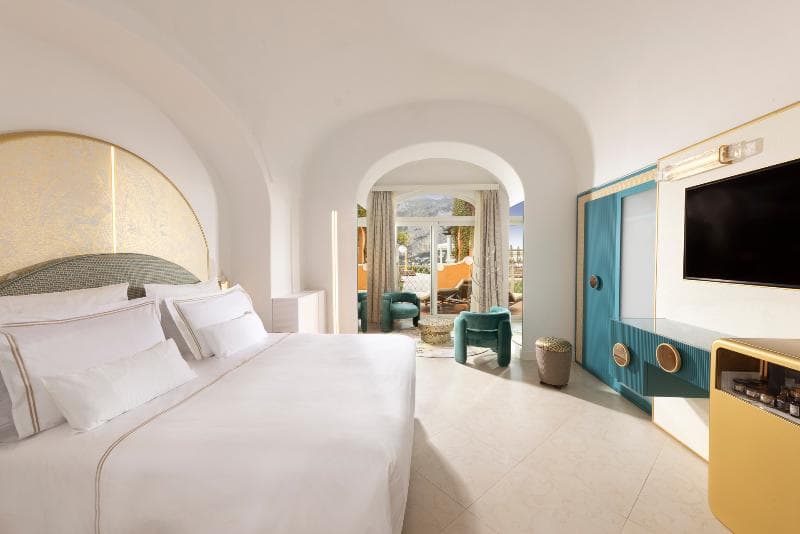
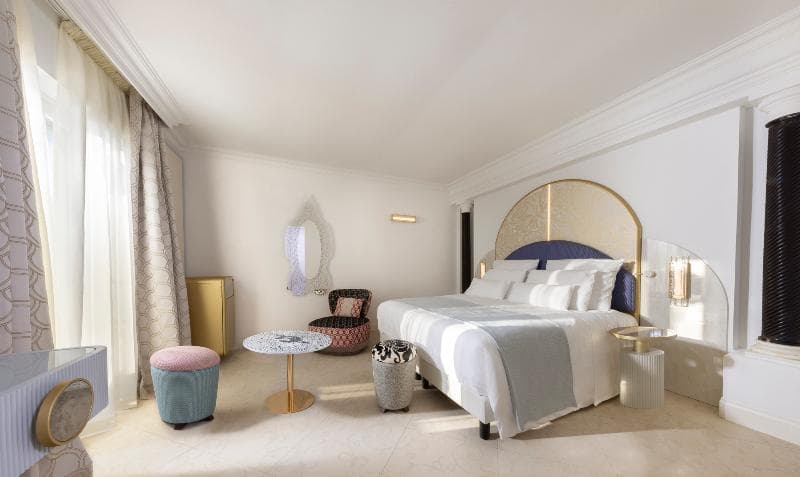
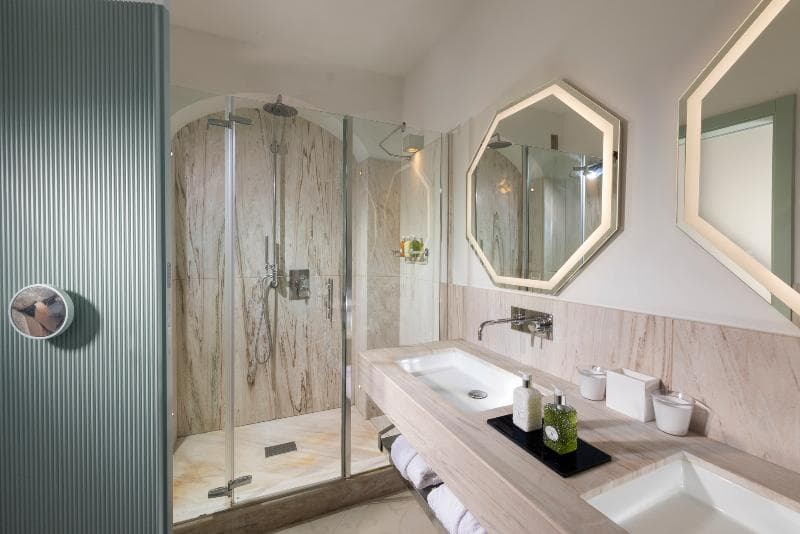
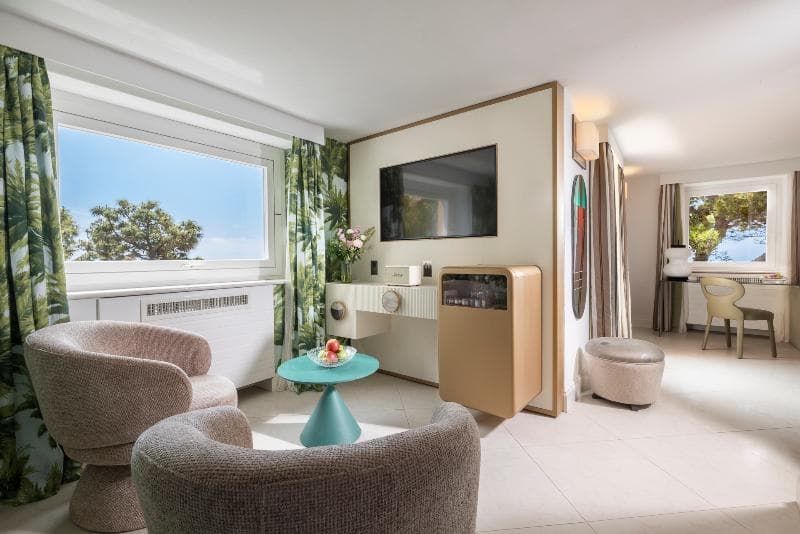
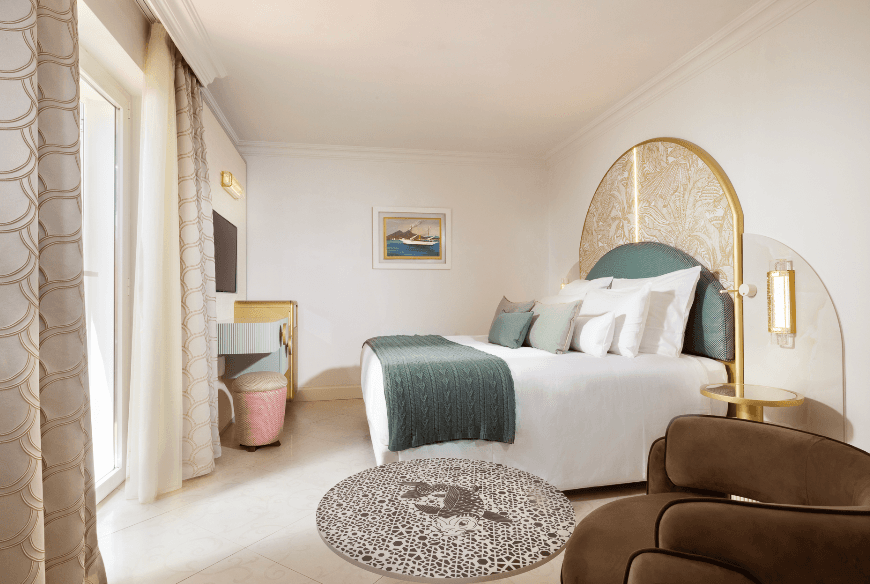
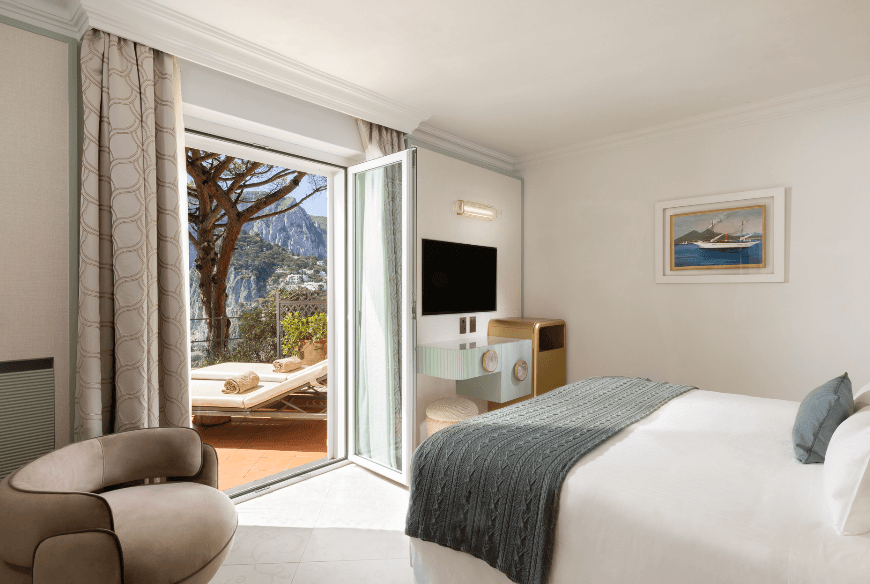
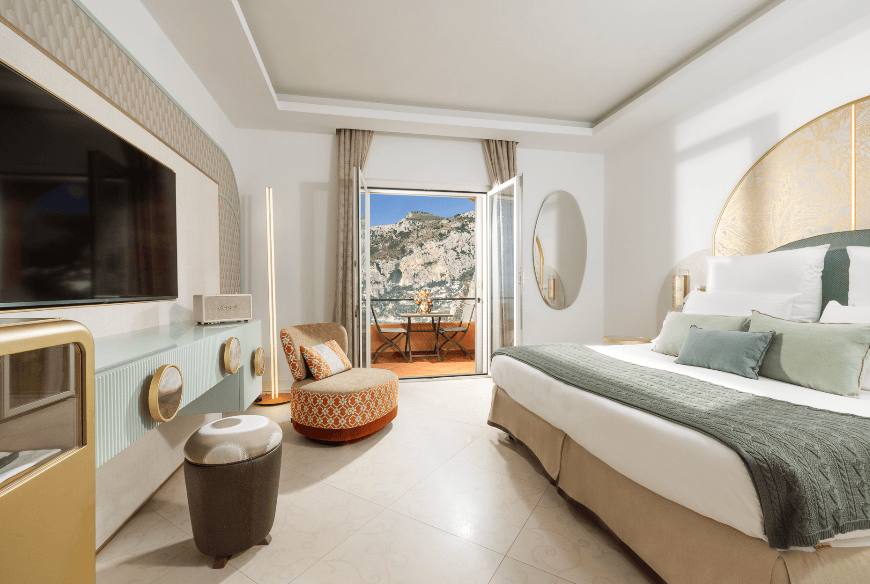
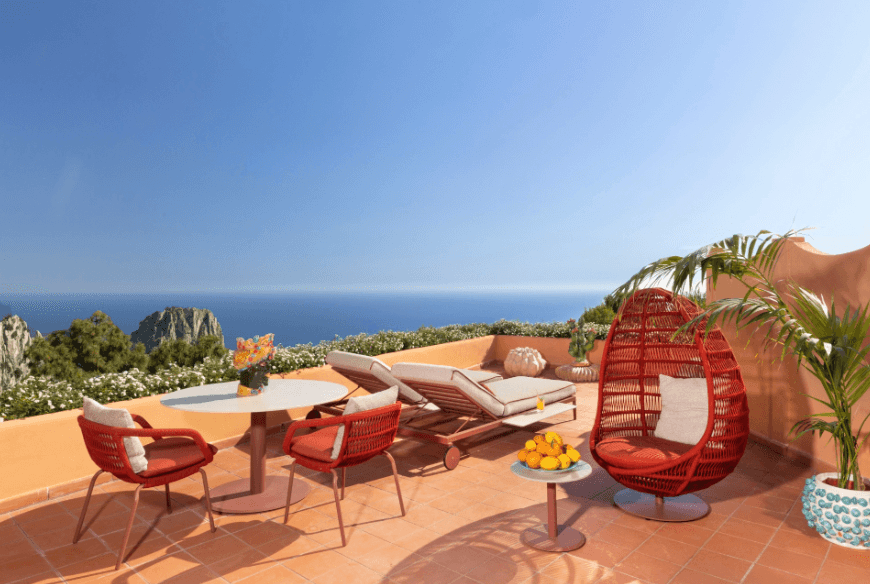
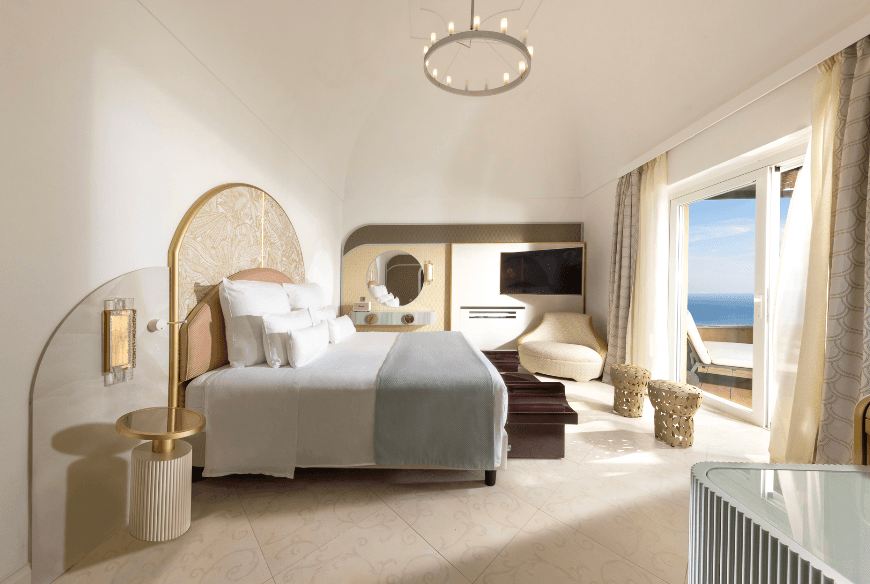
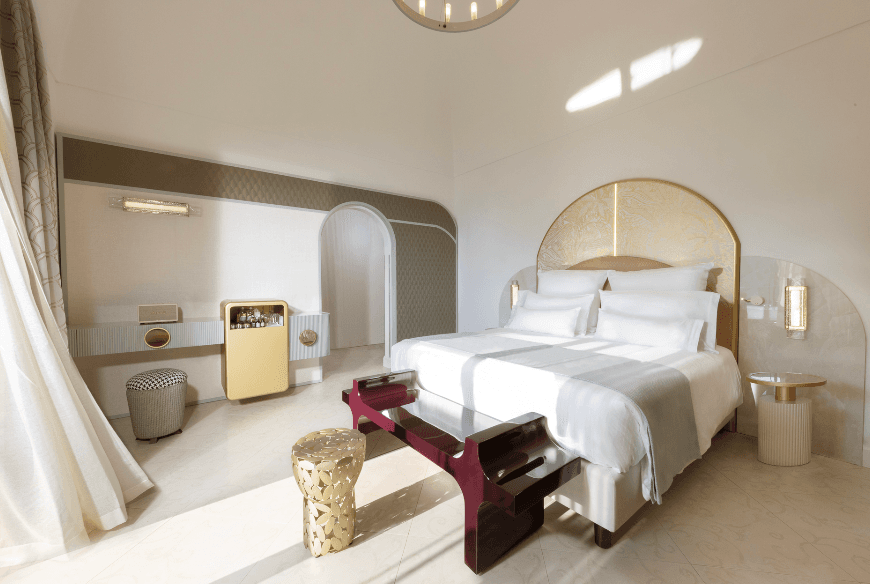
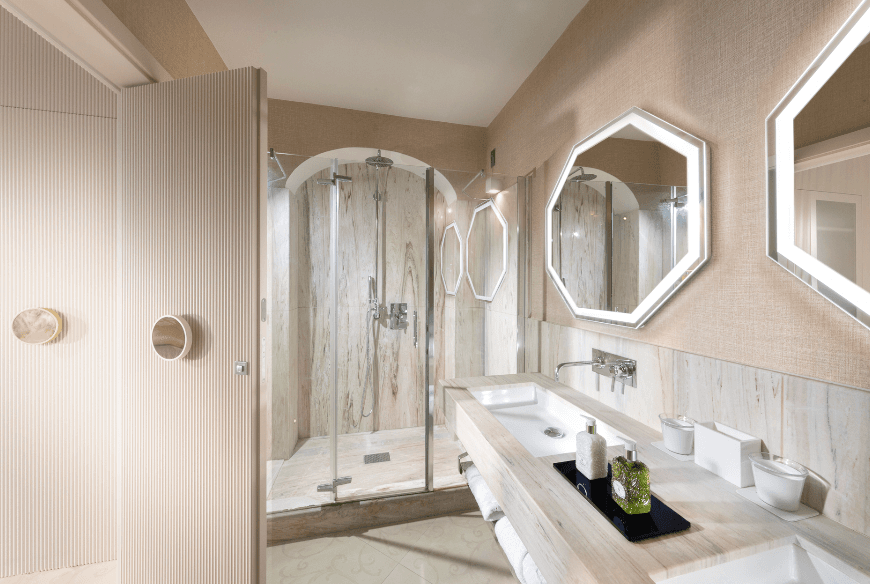
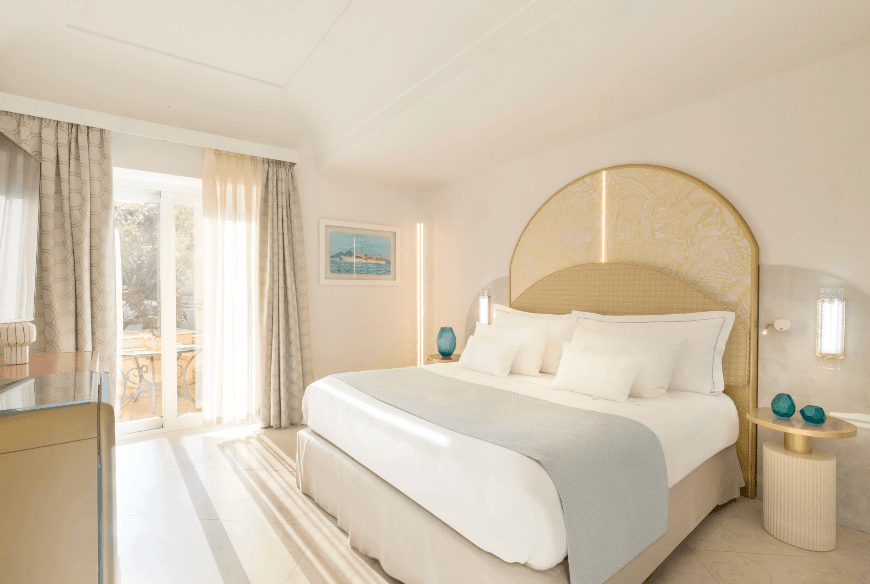
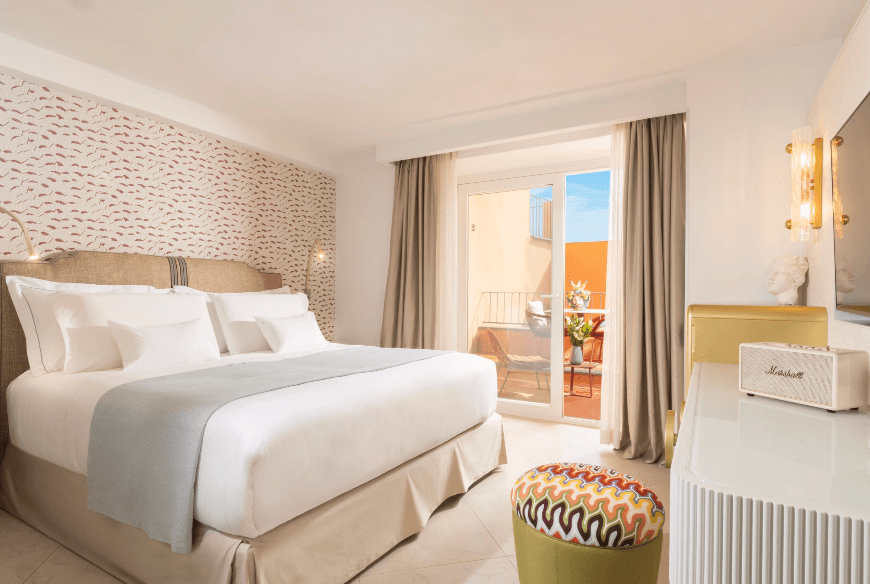
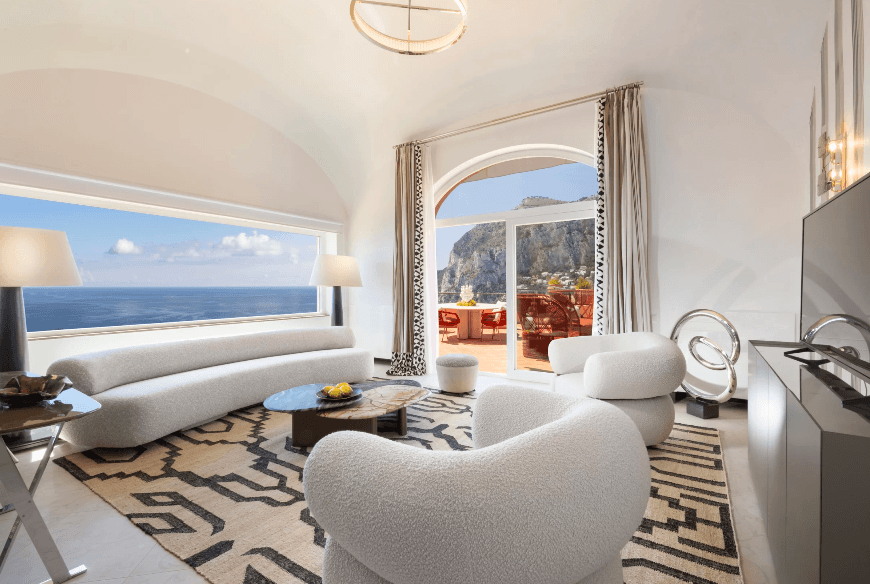
Superior Room
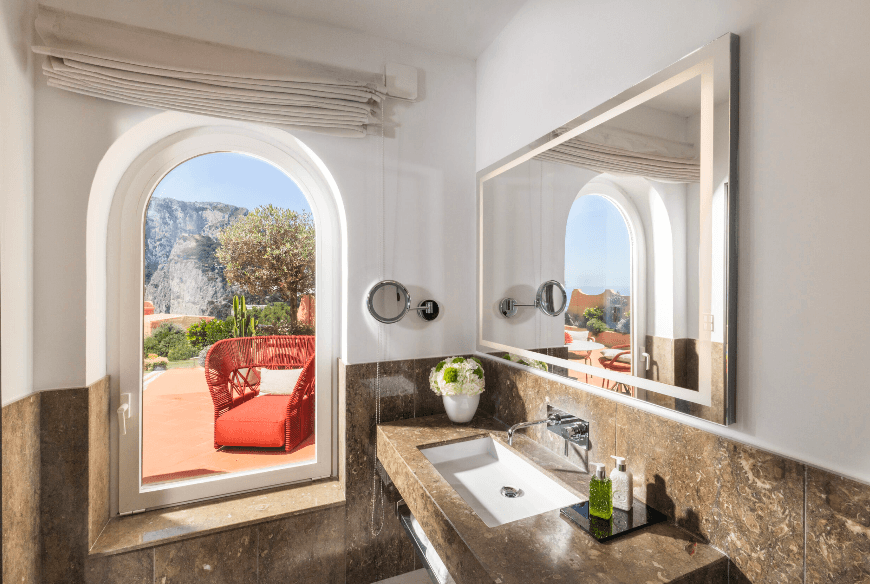
269 sq.ft • Garden View
From $804
THE PINK NOTEBOOK VERDICT
Hotel Punta Tragara
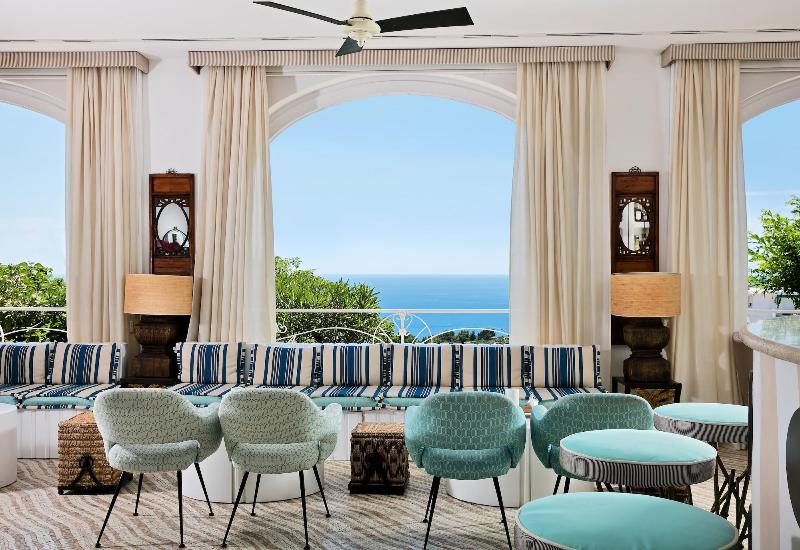
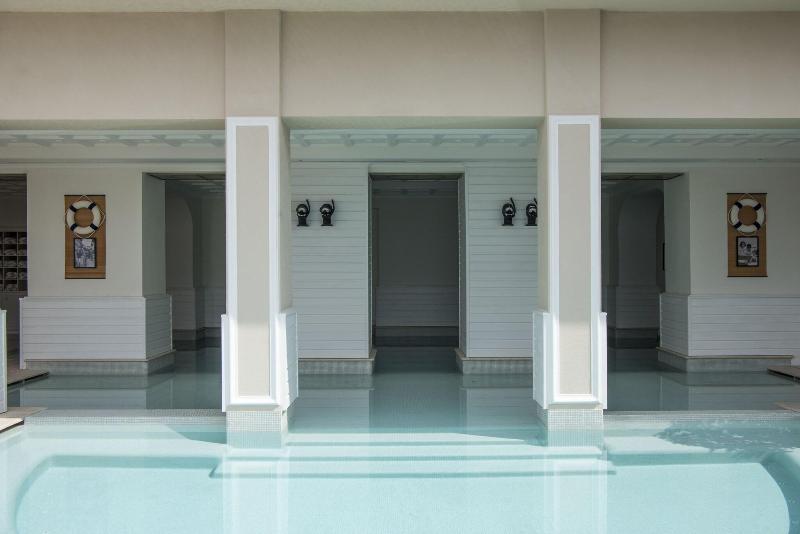
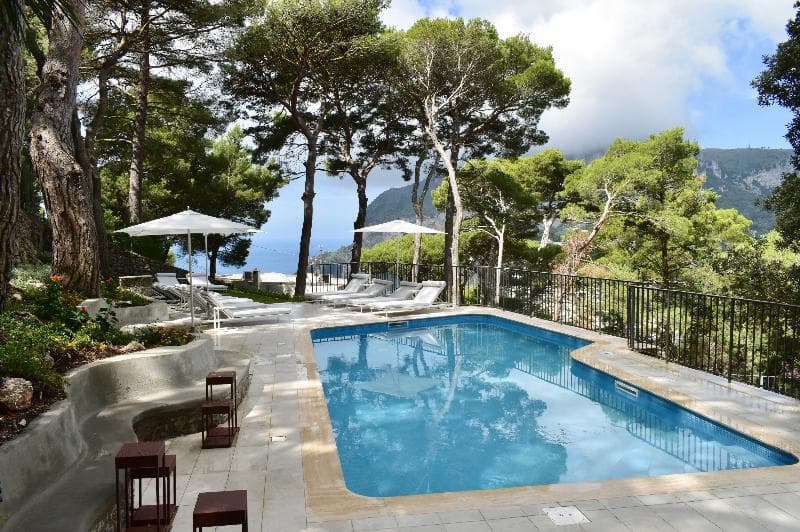
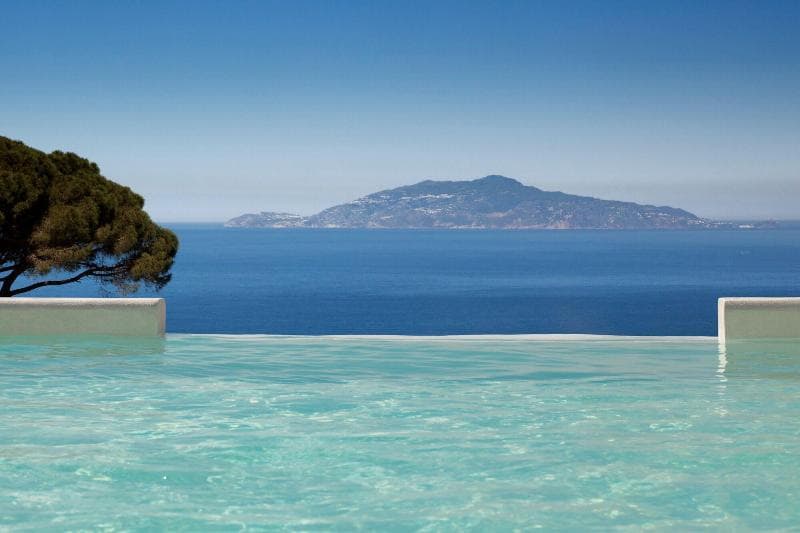
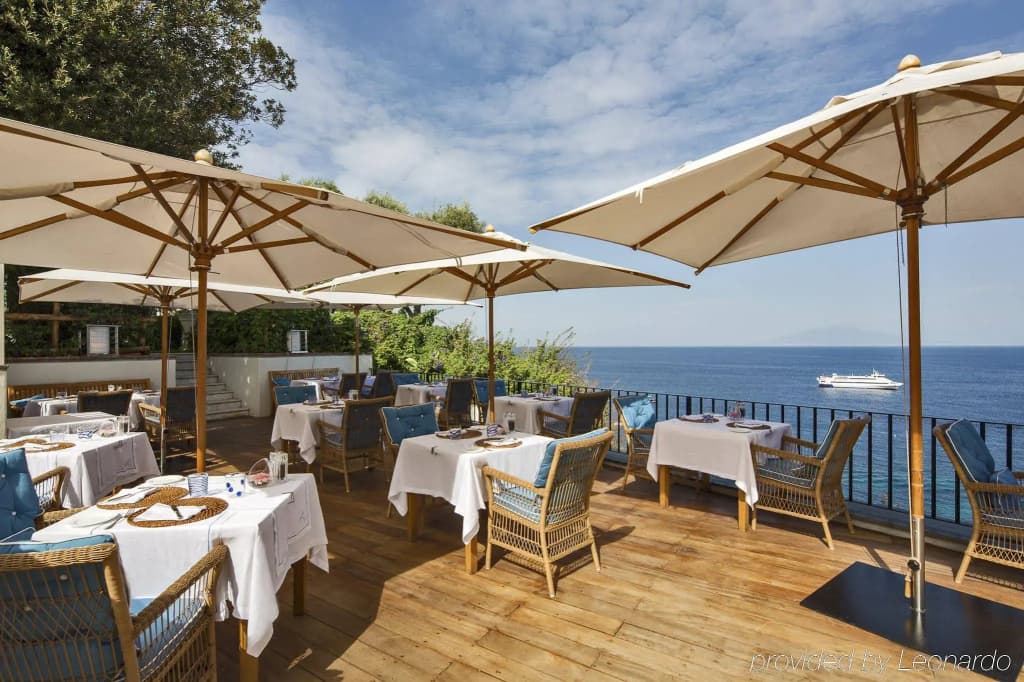
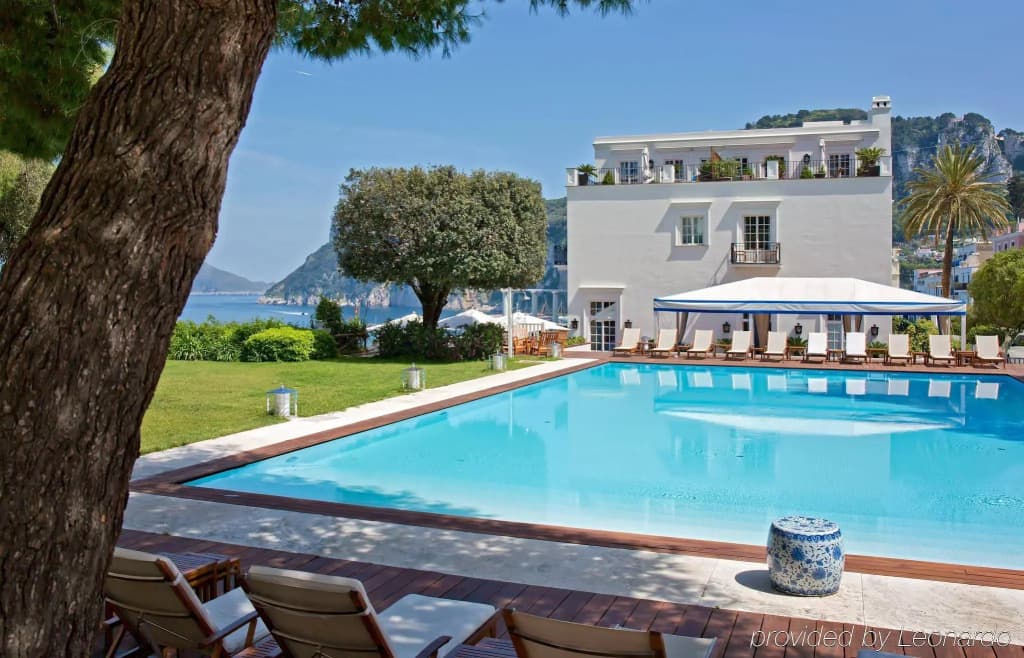
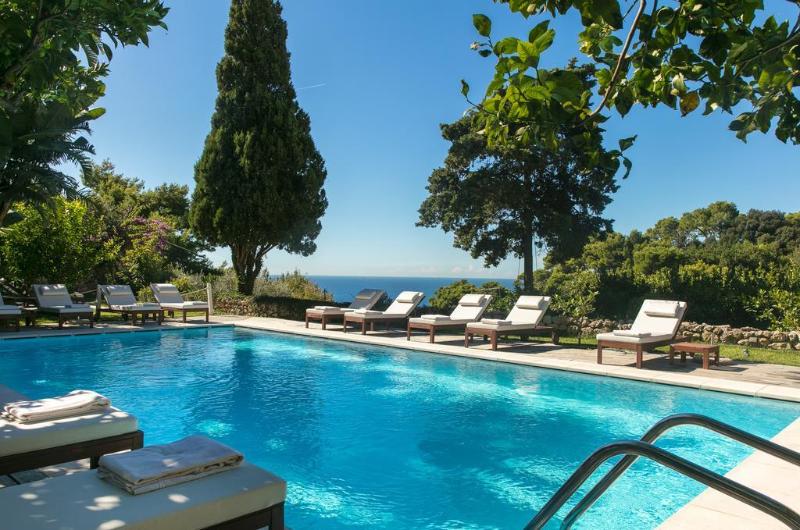
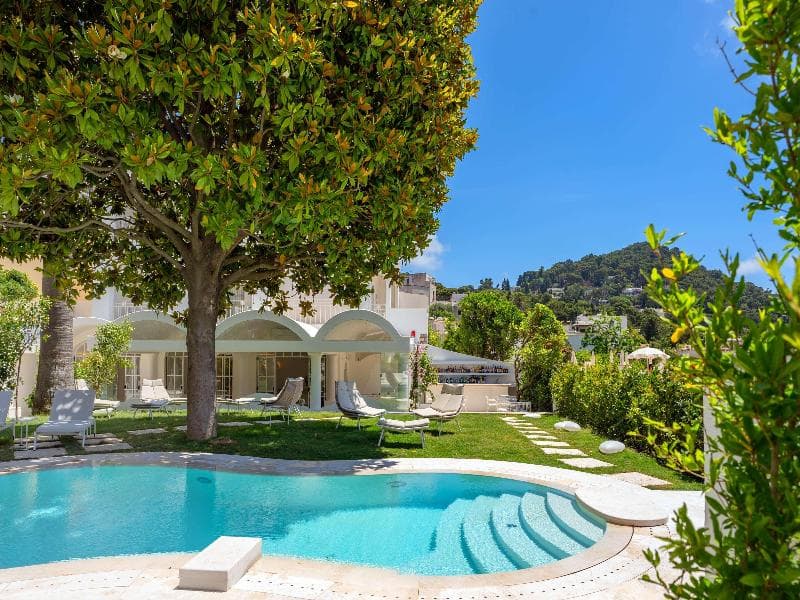
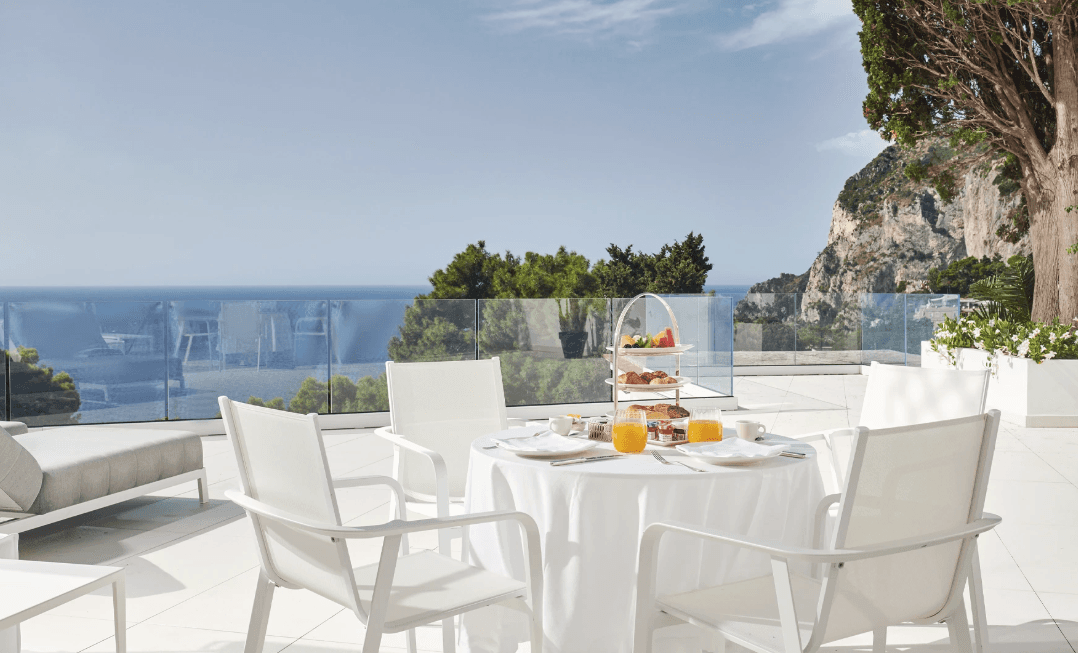
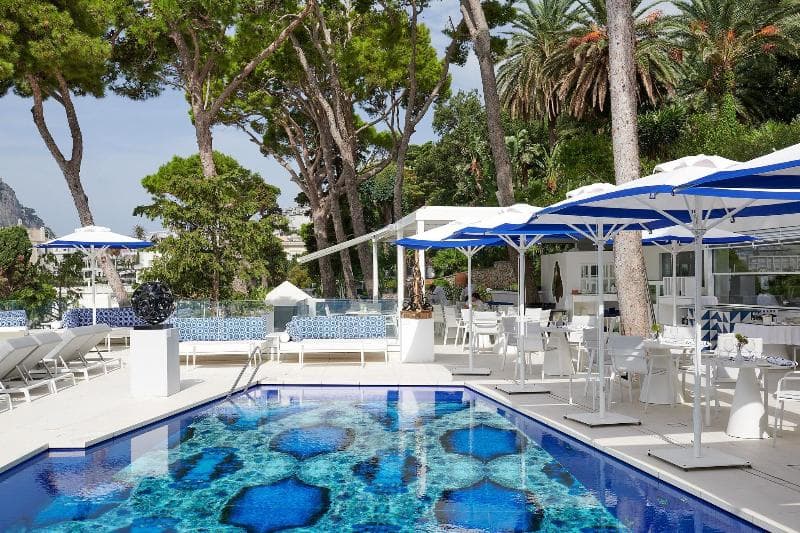
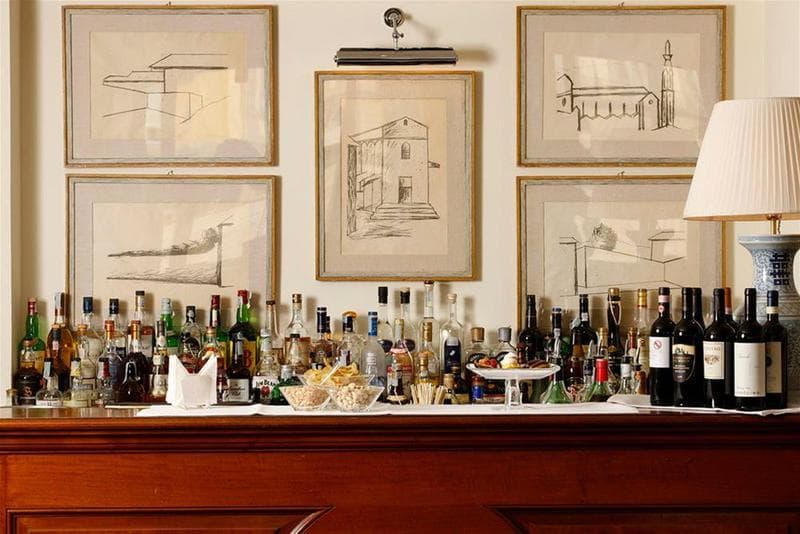
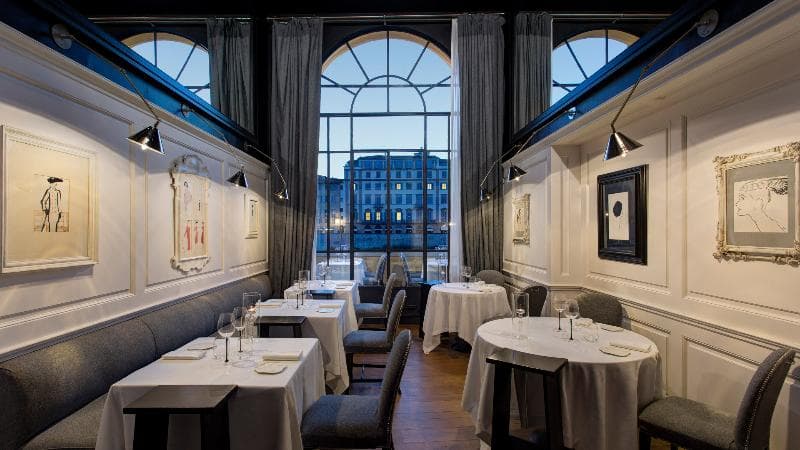
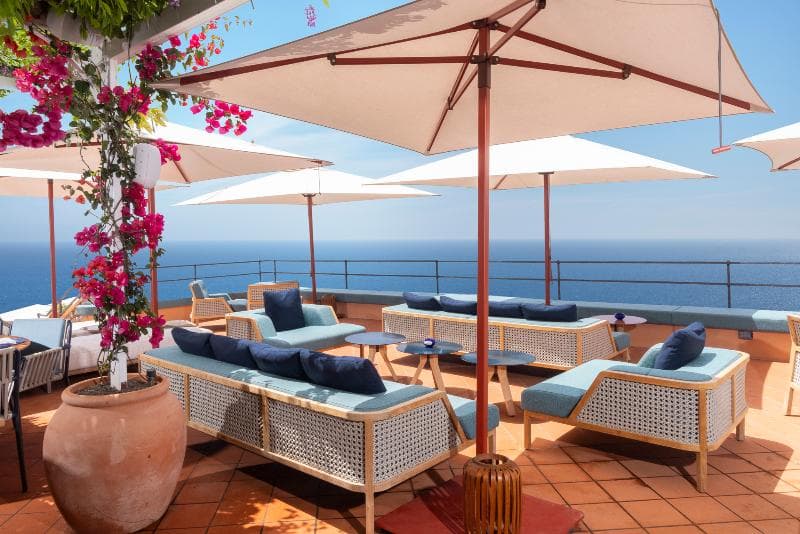
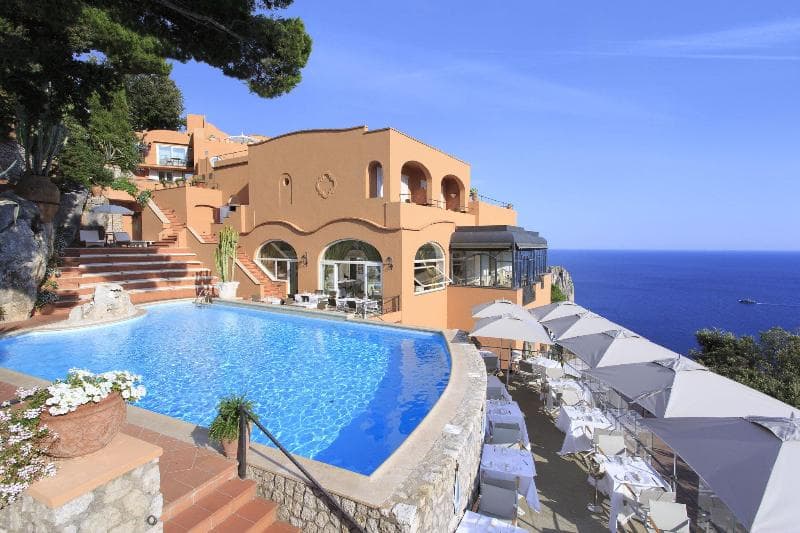
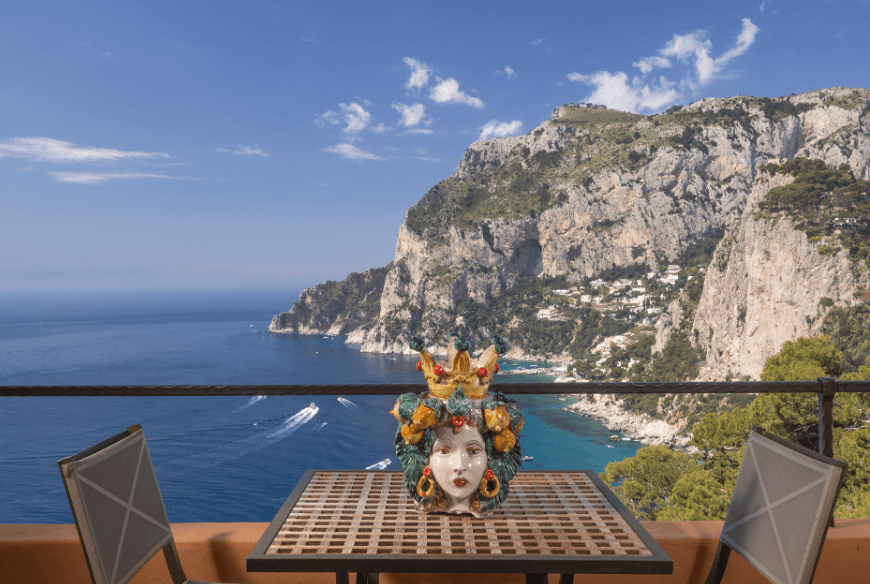
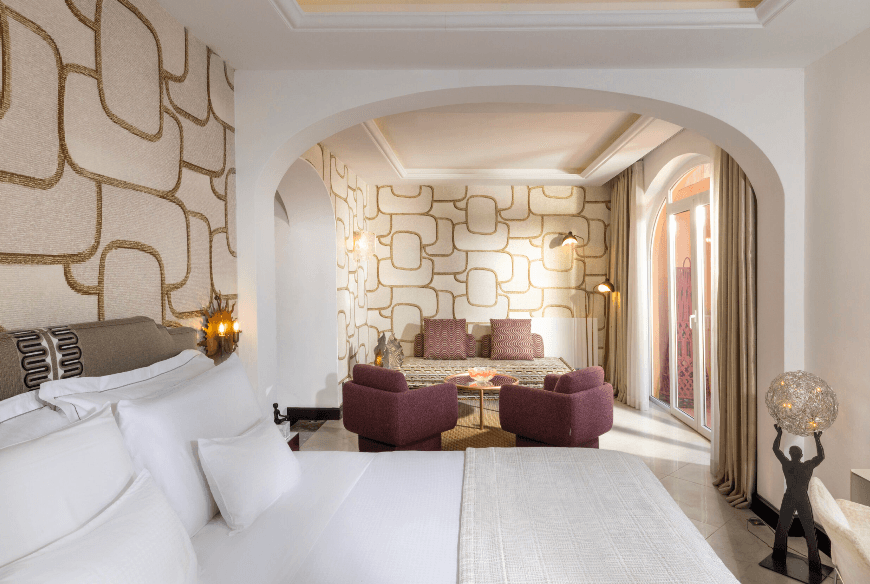
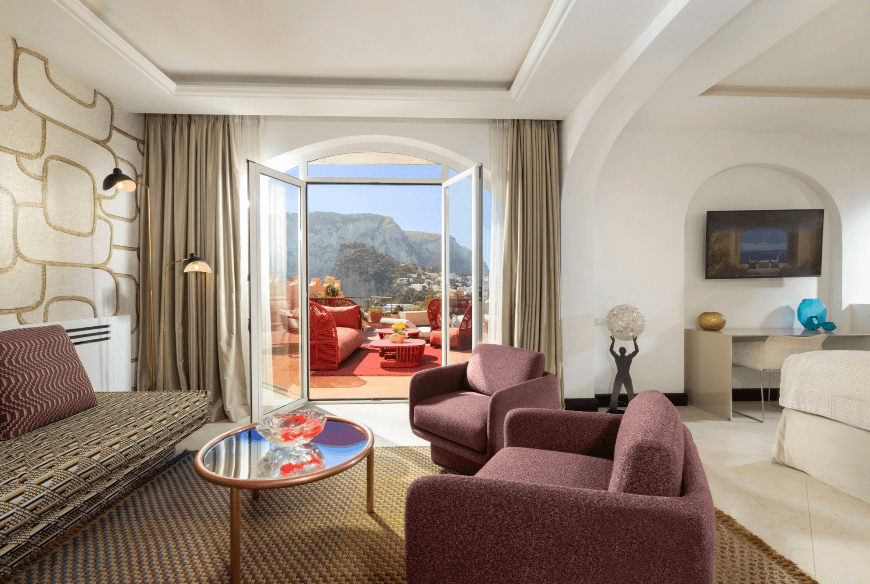
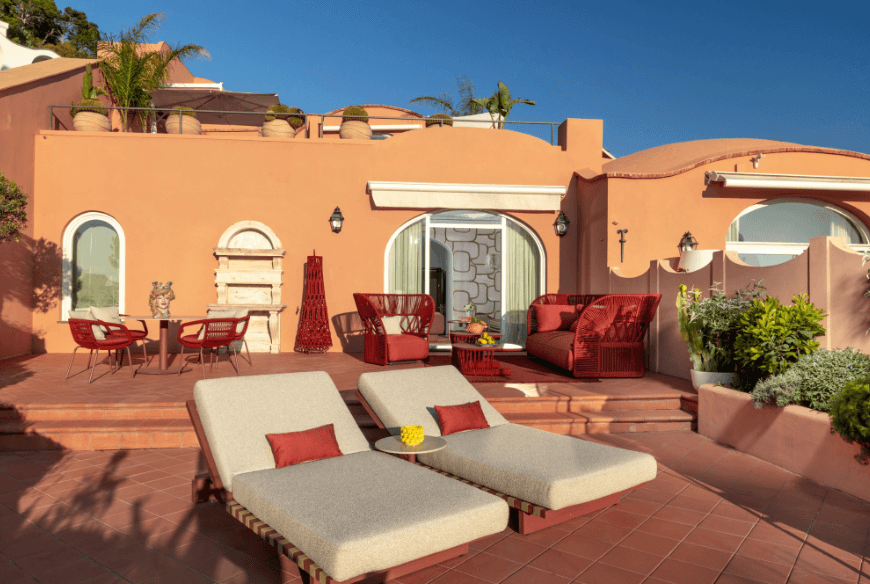
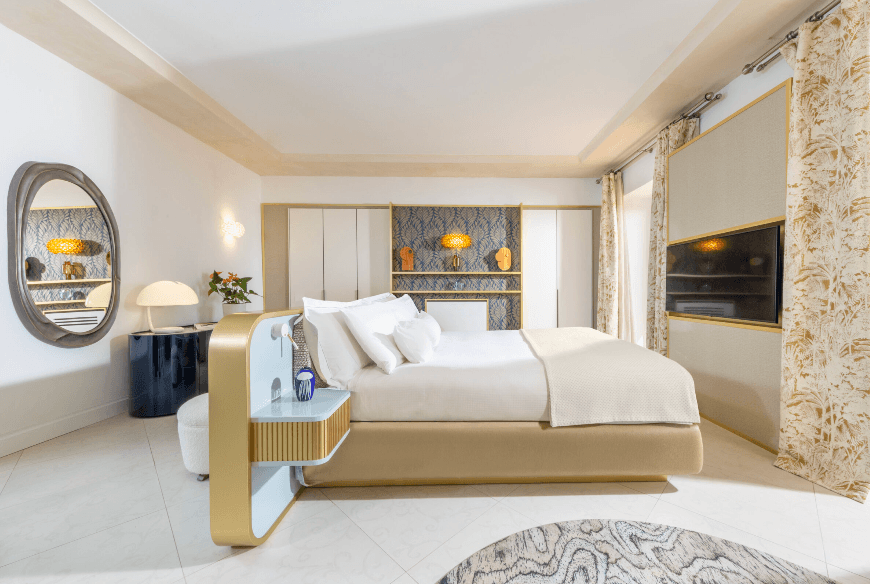
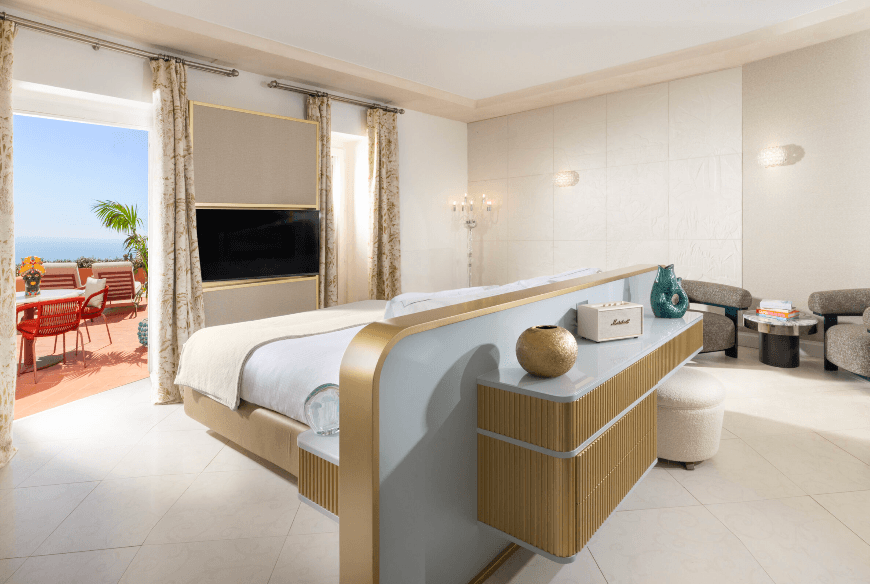
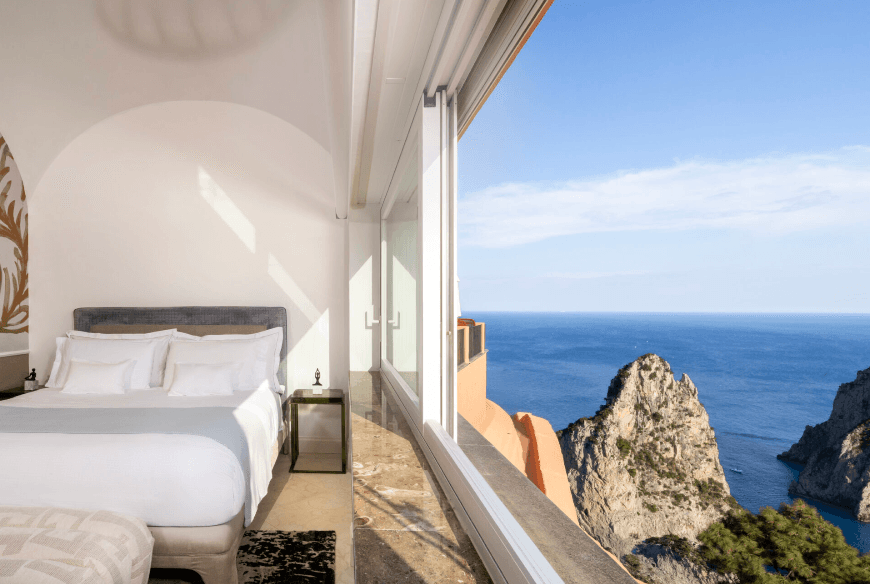
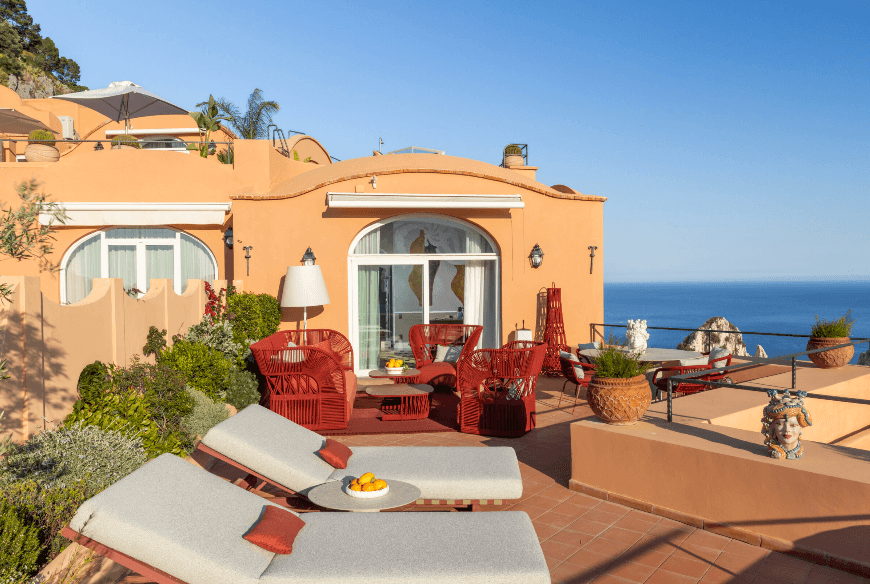
At the far end of Via Tragara, where the footpath narrows past stone villas and oleanders and then simply stops at the cliff's edge, there is a four-storey peach-coloured building that Le Corbusier once described, in Domus, as an emanation of the rock, a filiation of the island, a plant phenomenon, almost an architectural lichen grown on the side of Capri. The villa was commissioned in 1920 by Emilio Errico Vismara, a Lombard engineer who had made his fortune electrifying Sicily, as a private residence so large and spectacular that it earned the local nickname Stracasa, the extraordinary house. It became rather more extraordinary still during the Second World War, when Generals Eisenhower and Clark and Winston Churchill used it as a rest headquarters, reportedly spending their evenings on the terrace overlooking the Faraglioni rock stacks, drinking whisky and watching the sea. In 1968, the Roman entrepreneur Count Goffredo Manfredi purchased it; in 1973, he opened it as a hotel. It is now run by the count's grandchildren, Goffredo Manfredi and Leonardo Ceglia, as part of the Manfredi Fine Hotel Collection, and it has 44 rooms and suites, no two of which are identical, ranging from compact doubles to the new Parthenope Suite, a 70-square-metre room named after the mythological siren, with iridescent wall coverings and a palette that moves from beige to powder pink. The most recent renovation was led by architect and interior designer Giorgia Dennerlein of Loto Ad Project, who completed a full intervention in 2022 and has continued adding to the hotel for the 2026 season. Her approach is layering rather than replacing: travertine, bronze, and brass introduced alongside the original thick limestone walls and varying ceiling heights, with linen curtains, antique furnishings, and custom pieces sourced from Neapolitan workshops. The Pegaso Suite was furnished in collaboration with Etro Home Interiors, using textile motifs drawn from Mediterranean flora. The Cin Cin Bar, redesigned this season with ceramic surfaces, wood finishes, and artwork by Alessandro Florio, is the obvious aperitivo stop; the Gin Bar, originally designed by Willy Rizzo and drawing on a 1970s aesthetic, is another. At Le Monzù, the hotel's flagship restaurant with its Roman mosaic floor and cliff-facing veranda, chef Pedana leads the kitchen, and the room's recent refurbishment has opened up the connection between indoors and out. Pool lunches, served at the larger of the two freshwater pools (one heated with jets designed for thalassotherapy), follow a seafood-led format suited to the pace of a Capri afternoon. The Gili Wellness Area holds four treatment rooms, each with an outside relaxation area; the Fabrizzio Narducci hair salon is next door. The building does most of the work here, which is both the property's greatest strength and a kind of honest relief. Because the original villa's floor plan is so irregular, with corridors that twist and ceilings that shift height and rooms that absorb the logic of the terrain rather than overriding it, you never feel you are in a conventional hotel, and the views, from every terrace, every pool, every named room, are positioned directly over the Faraglioni. The hotel opens in April and closes in October, and there is a three-night minimum in high season, which has a way of ensuring that most guests have actually committed to being there, rather than passing through on a schedule. It suits people who walk slowly, who want to eat well at a terrace table and then walk back to their room without crossing a lobby, who are interested in the history that is still physically present in the limestone walls, and who find the idea of a hotel that doesn't announce itself from the street, that requires a deliberate fifteen-minute walk from the Piazzetta, to be a feature rather than an inconvenience. You should not come if you need a hotel that offers Capri as a base for excursions, with a flexible check-in and a pickup at the harbour, because the logistics of arrival and departure here require some effort and some patience, and the hotel is oriented entirely around staying, not around movement. You should come if you want to spend a week reading and swimming and eating in a building that Le Corbusier admired enough to sketch obsessively in his notebooks, that survived a world war, that looks like it grew from the cliff rather than being placed on it, and that is now, at more than a hundred years old, having one of its better renovations. The short version: A 44-room Le Corbusier villa above the Faraglioni, opened as a hotel by Count Goffredo Manfredi in 1973 and now run by his grandchildren, with two pools, a Le Monzù terrace restaurant, and rooms named rather than numbered, each shaped by the terrain beneath them.
Can't find it? Reach out for insider rates and effortless bookings.
What to Know Before You Go
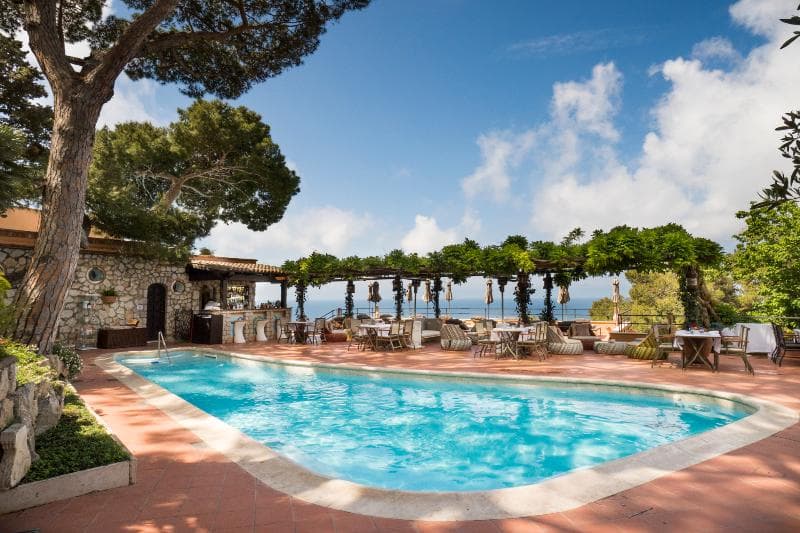
The thalassotherapy pool is quieter than the main one mid-morning, before the bar crowd arrives.
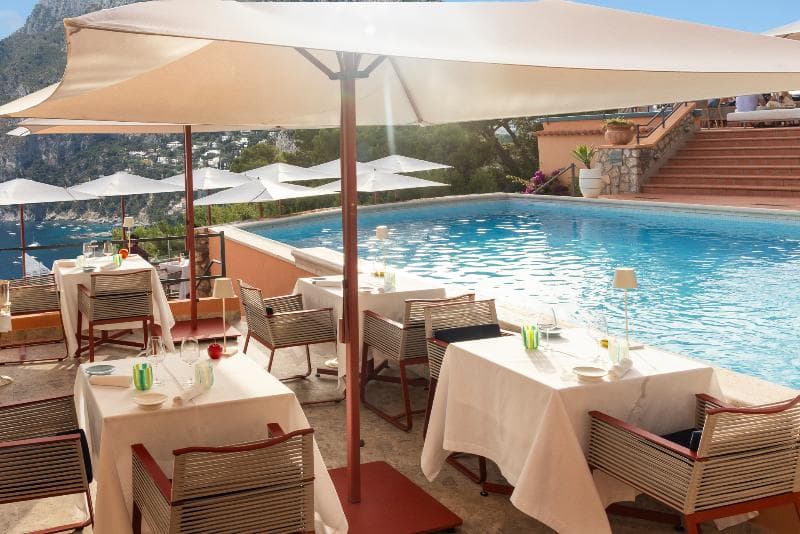
Reserve inside as well as out. The Roman mosaic floor, kept through the 2026 refurbishment, is worth seeing.

Linen for terrace evenings, where the cliff catches wind after nine, and grip-soled shoes for the stone path to La Fontelina.
Where you'll be
A few notes on your visit.
Hotel Punta Tragara is ideally located on the captivating island of Capri.
With 44 rooms and an elevator, the hotel promises accessibility and comfort.
The hotel offers a plethora of amenities including a baggage storage service, a safe, and a currency exchange service.
Stay connected on your vacation with the hotel's complimentary WiFi.
The hotel's tour desk is eager to assist you in planning your excursions.
Unwind by the cozy fireplace in the communal area.
Stroll around the hotel's verdant garden for a dose of tranquility.
The hotel also features a TV room and a playroom for your entertainment.
The best stays aren’t a click away. Exclusive to our community just reach out and we’ll arrange it just for you
Founder’s Note
THE PINK NOTEBOOK VERDICT
Your taste already has an address